

A company firm is a legal entity that stands out from its owners, supplying them restricted obligation and allowing the business to operate, enter contracts, obtain, and conduct company in its very own name. Corporations are highly favored for their capability to raise resources via the sale of stocks, which represent shares of ownership in the firm. This framework divides the ownership right into potentially millions of shares, enabling large-scale investment and danger circulation amongst a large base of shareholders. In addition, the company structure gives perpetual existence, meaning the corporation can survive past the lives of its specific members or modifications in its ownership. This feature is critical for guaranteeing lasting task feasibility and operational security.
Companies are established up under state regulations in the USA, and each state has its very own set of laws governing their dissolution, creation, and company. Usually, the process entails filing articles of incorporation with the state's secretary of state and sticking to certain upkeep requirements such as holding annual meetings and submitting annual records. These entities are also subject to federal regulations, especially worrying taxes. The Internal Revenue Solution (INTERNAL REVENUE SERVICE) deals with corporations as separate tax entities, which can cause dual tax-- first, when the firm makes a profit, and second, when rewards are paid to investors. Nonetheless, approaches like choosing S firm standing can help small companies prevent this situation by permitting earnings and losses to be gone through directly to owners' individual tax obligation returns.
Comprehending Service Corporations
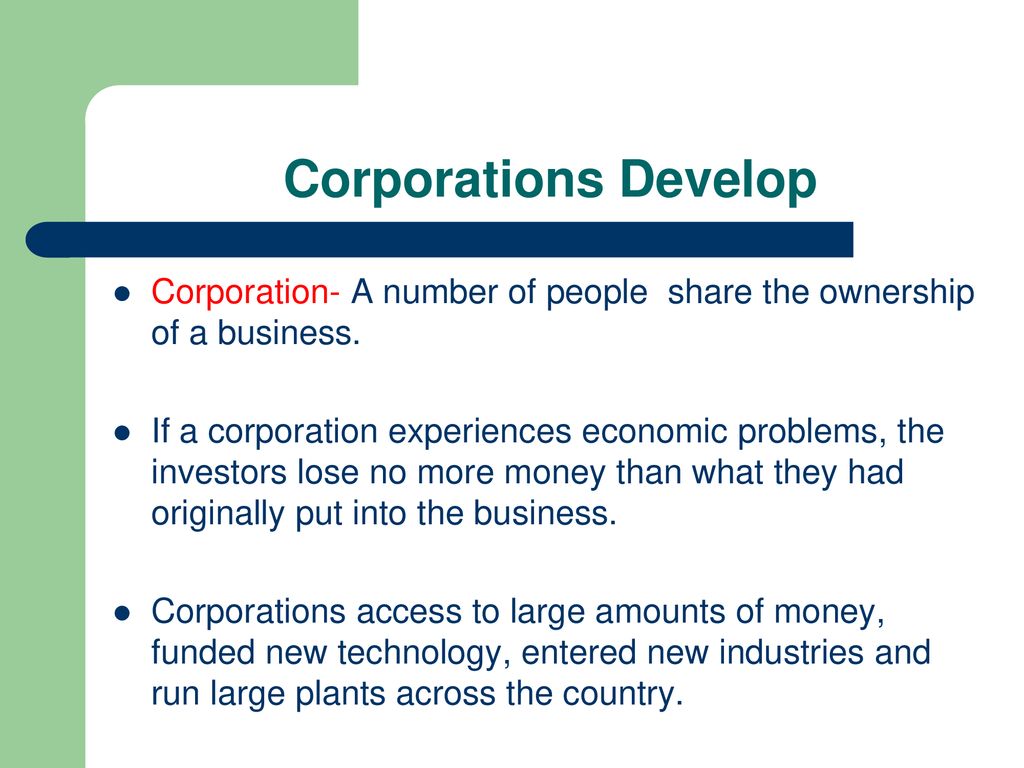
A company firm is a legal entity that is separate and unique from its owners, who are called investors. This framework allows the corporation to possess assets, sustain responsibilities, and perform service in its own name, rather than in the names of its shareholders. One of the main benefits of a corporate framework is the restricted responsibility defense it offers to its investors. This implies that in the majority of situations, investors are just monetarily responsible for the quantity of their financial investments in the firm and are not personally in charge of the company's responsibilities and debts. This protection encourages investment and sustains the development and development of business. Firms are also identified by their capacity to elevate resources via the issuance of shares. These shares represent ownership in the firm and can be dealt, supplying a system for the company to safeguard necessary funding while offering investors a potential return on their financial investment via returns and share rate admiration. Another considerable element of companies is their perpetual existence. Unlike data management companies in usa or single proprietorships, firms do not discontinue to exist upon the death or withdrawal of an investor. They can continue forever, until they are legally dissolved. This function makes them specifically appealing for long-lasting tasks and investments. Ultimately, firms go through details regulatory and coverage demands which vary substantially from other service entities. These requirements, which often consist of the declaring of annual records and economic declarations, are planned to guarantee transparency and accountability, securing the rate of interests of financiers and the general public. In general, the business framework supplies a blend of benefits that make it an extremely desirable option for numerous entrepreneurs and financiers looking for to stabilize risk and reward in the business setting.
Secret Elements of Corporate Structure and Administration
In reviewing the complexities of service companies, it is critical to recognize the structure of corporate framework and governance which defines the pecking order of monitoring and the plans that control the communication among stakeholders. At the core of this framework is the board of directors, tasked with the overarching obligation of guiding the firm towards a lasting future by adopting sound, honest, and lawful administration and monetary management plans, and by choosing on significant firm concerns. Every board member plays an essential role, typically bringing varied know-how from different fields that add to a balanced and educated decision-making procedure. Below this tier, the executive administration team, including the chief executive officer, CFO, and COO, manages the everyday operations, making sure that the board's directives are implemented properly and the firm's objectives are met effectively. This dual structure guarantees a system of checks and equilibriums, where functional decisions are inspected at a greater level, preserving liability and straightening with the business's long-term technique. Business governance additionally extends to managing partnerships with all stakeholders, consisting of investors, workers, consumers, and the communities in which they operate. Efficient administration involves clear communication and ethical conduct that enhances the credibility and long-lasting success of the company. This structure not only sustains compliance with the legislation however additionally promotes a culture of honesty and duty, crucial for sustaining service procedures in an affordable worldwide market. Understanding these aspects is vital for anyone took part in or with organization companies, as they develop the backbone of corporate success and long life.
Trick Aspects of Service Firm Structure and Administration
Thorough understanding of business company framework and governance is crucial for both emerging and established businesses. A business corporation, necessarily, is a legal entity distinct from its owners, giving them restricted liability and allowing less complicated accessibility to resources via the sale of stock. Incorporation includes an organized pecking order starting with shareholders, that have the shares and have the utmost control over choosing the board of supervisors. The board of supervisors, consequently, holds the obligation of managing the corporation's calculated instructions and making major decisions, yet day-to-day operations are typically handled by the company policemans and execs. This separation of powers is created to boost functional effectiveness while safeguarding the interests of all stakeholders. Company governance frameworks are critical as they define the methods for decision-making processes, the balance of power, and the accountability systems to stop conflicts of rate of interest and promote transparency. Compliance with administration standards and regulations not just strengthens the corporation's reputation however also guards it versus possible economic discrepancies and lawful challenges. In this globalized economic situation, comprehending the subtleties of such structures and administration versions can considerably affect the sustainability and development trajectory of a firm.
Strategic Considerations in Corporate Monitoring
In the intricate globe of company corporations, critical administration plays a pivotal duty in guiding firms in the direction of sustainability and development in highly open markets. This involves not only the formula of visionary goals but additionally the careful crafting of plans to achieve these purposes successfully. A core aspect of this method is recognizing market dynamics and customer needs, which calls for a continual analysis of market fads and customer actions. Firms should take advantage of progressed analytics and huge data to improve their market methods, guaranteeing they remain affordable and relevant. Company leaders require to focus on technology, not just in terms of products or solutions, however also in organization processes and designs. This may include accepting brand-new modern technologies such as artificial intelligence and blockchain, which can result in significant renovations in efficiency and safety. An additional basic aspect is danger administration; firms must establish durable structures to recognize, examine, and alleviate prospective risks linked with their functional, monetary, and reputational transactions. Reliable calculated administration additionally requires a concentrate on sustainability-- balancing financial success with environmental obligation and social equity. This alternative approach not just assists in building a favorable brand image however likewise makes sure long-term earnings by aligning the business's procedures with the more comprehensive assumptions of culture and the restrictions of our native environment.